
The Complete Guide to EPA Section 608 Certification for HVAC Techs
- Home
- The Complete Guide to EPA Section 608 Certification for HVAC Techs
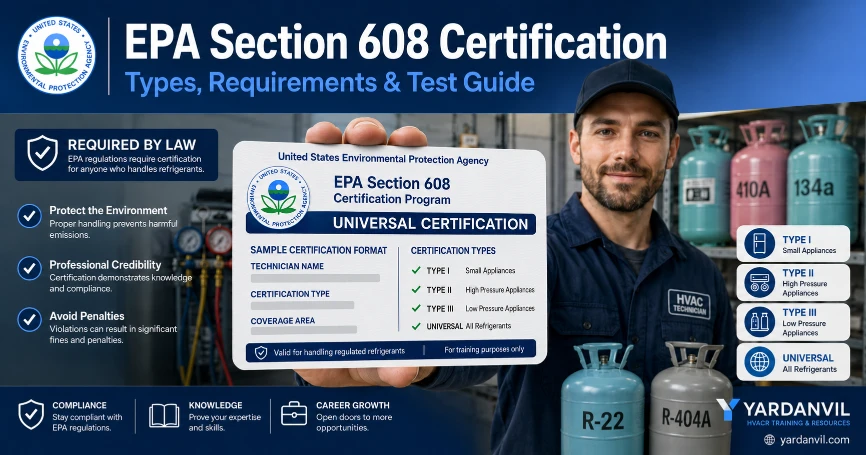
EPA Section 608 certification is the federally required credential for anyone who services, maintains, repairs, or disposes of equipment that contains regulated refrigerants. If you handle refrigerant in the United States, you must hold a Section 608 certification appropriate to the equipment you service, and the certification is also the legal gate to buying regulated refrigerant. For HVAC technicians, Section 608 is not an optional resume line; it is the license to do the job. This guide explains what Section 608 certification is, the four certification types and the equipment each covers, how to earn the credential, and how to use it to purchase refrigerant legally.
We link throughout to Frigentra's EPA verification process, the certification FAQ, the compliance guidelines, and our guide to why certification matters. When you are certified and ready to buy refrigerant with EPA cert, Frigentra verifies your credential at checkout and ships virgin refrigerants and certified reclaimed R-22, meeting AHRI-700 purity standards, with free standard ground shipping in the 48 contiguous U.S. states.
Why is EPA 608 Certification Required?
Section 608 of the Clean Air Act, passed in 1990 and implemented by the U.S. Environmental Protection Agency, prohibits the knowing venting of regulated refrigerants into the atmosphere and requires that anyone who handles those refrigerants be trained and certified. The regulatory text lives on the EPA Section 608 program page. The purpose is environmental: regulated refrigerants, whether ozone-depleting like R-22 or high-GWP like R-410A, cause measurable atmospheric damage when released, and the certification program is the mechanism by which the government ensures that the people who handle refrigerant know how to recover, recycle, reclaim, and dispose of it without venting.
The certification requirement also serves a commercial purpose: it is the legal gate to purchasing regulated refrigerant. Distributors are prohibited from selling regulated refrigerant to anyone who cannot document a valid Section 608 certification (with a narrow exception for small cans of certain motor-vehicle substitutes sold for DIY use). That gate is why Frigentra verifies certification at checkout; the sale is not legal without it, and a distributor that sells without verification is violating the same statute the technician would violate by venting.
The 2017 rule update expanded and clarified the program. It added new recordkeeping requirements, lowered the acceptable leak rate thresholds for certain systems, extended sales restrictions, and clarified that the certification covers the technician, not the employer. The update also reaffirmed that Section 608 certifications do not expire, which we address in the maintenance section below. Technicians certified before the update remain certified, but must comply with the current rules that apply to their work.
The 4 Types of EPA 608 Certification
Section 608 defines four certifications: Type I for small appliances, Type II for high-pressure systems, Type III for low-pressure systems, and Universal, which is the combination of all three. Each type authorizes the technician to service the equipment class it covers, and the Universal certification authorizes service of all classes. A technician chooses the certification type based on the equipment they actually service; a residential HVAC technician who works only on small split systems may need only Type I, while a commercial technician who works on chillers and high-pressure equipment benefits from Universal.
The exam structure reflects this. Every certification type includes a Core section covering general refrigerant knowledge, recovery, recycling, reclamation, safety, and the regulatory framework. The Core section is common to all types, and a candidate must pass Core plus the specific type section to be certified in that type. A Universal candidate must pass Core plus Type I, Type II, and Type III sections. The exam is multiple choice, and each section has its own passing score, typically 72 percent.
Choosing the right certification depends on career direction. A technician entering residential HVAC usually pursues Type I or jumps straight to Universal for maximum flexibility. A technician in commercial refrigeration needs Type II. A technician in centrifugal chillers needs Type III. Most career technicians eventually earn Universal because the marginal study effort is modest relative to the credential's coverage.
Type I Certification (Small Appliances)
Type I covers small appliances, defined as refrigeration and air conditioning equipment that is manufactured, charged, and hermetically sealed with five pounds or less of refrigerant. This includes household refrigerators and freezers, room air conditioners (window units), vending machines, and drinking fountains. The defining characteristic is the small hermetic charge; the appliance is sealed at the factory and is not intended to be serviced in the field with field-installed access valves.
Type I technicians learn the specific recovery requirements for small appliances, which differ from larger systems. The recovery equipment must be certified to EPA standards, and the technician must recover refrigerant to specified vacuum levels before opening the system. Type I also covers the handling of the small refrigerant charges typical of these appliances, where the total charge is small but the aggregate environmental impact across millions of units is significant.
Type I is the entry-level certification for many technicians because the equipment is common and the exam content is approachable. It is also the certification that applies to a meaningful share of residential service calls involving window units and household refrigeration. For a technician whose work is exclusively residential small appliances, Type I is sufficient; for any work on larger residential split systems or commercial equipment, Type II or Universal is required.
Type II Certification (High-Pressure Systems)
Type II covers high-pressure systems, which include the residential and light-commercial air conditioning and refrigeration equipment that operates above a defined pressure threshold. This is the certification most residential HVAC technicians need, because it covers the split systems, package units, and commercial refrigeration that constitute the bulk of residential and light-commercial service work. R-410A, R-32, R-22, R-404A, and R-407C systems fall in this category.
Type II technicians learn recovery techniques for high-pressure systems, including the use of recovery machines and recovery cylinders rated for the pressures involved, the evacuation levels required before and after service, and the leak repair requirements for systems above the 50-pound charge threshold. Type II also covers the specific safety considerations of high-pressure refrigerant, including the risk of cylinder overpressure and the importance of never overfilling a recovery cylinder beyond its rated capacity.
For most technicians pursuing a residential or light-commercial HVAC career, Type II is the minimum useful certification, and the path is usually Type II followed by Universal as the technician's work expands. The Type II exam content assumes the Core knowledge and adds the high-pressure specifics, so a candidate who has studied Core and Type II is prepared for the residential service work that pays the bills in the early career.
Type III Certification (Low-Pressure Systems)
Type III covers low-pressure systems, primarily the centrifugal chillers used in large commercial and industrial cooling. These systems use low-pressure refrigerants such as R-123 and operate under conditions that differ markedly from the high-pressure residential equipment of Type II. The charge sizes are large, the recovery procedures are specialized, and the safety considerations include the specific toxicity profile of the low-pressure refrigerants in use.
Type III is the specialty certification for commercial chiller technicians. It is the least common of the three type certifications because the equipment it covers is the least common in the field, but for the technicians who service that equipment, it is the required credential. Type III covers the specialized recovery equipment for low-pressure chillers, the leak detection and repair procedures for the large charges involved, and the regulatory requirements that apply to large commercial systems.
Most technicians do not start with Type III. A technician who moves into commercial chiller service typically adds Type III to an existing Type II or Universal certification as their career specializes. The Type III content is the most specialized in the program, and it is the certification that opens the door to large commercial and institutional service work.
Universal Certification (The Gold Standard)
Universal certification is the combination of Core, Type I, Type II, and Type III. A Universal technician is authorized to service every class of equipment covered by Section 608, from a household refrigerator to a centrifugal chiller. It is the gold standard for working technicians because it imposes no equipment-class limit on the holder's authority to handle regulated refrigerant.
The practical value of Universal is career flexibility. A technician with Type II alone cannot legally service a low-pressure chiller, and a technician with Type I alone cannot legally service a residential split system. A Universal technician faces no such limit, which matters for employers who bid varied work and for technicians who may move between residential, commercial, and specialty service over a career. The marginal study effort to add Type I and Type III to a Type II preparation is modest for most candidates, and the credential's coverage is comprehensive.
For technicians entering the field with career ambition, Universal is the recommended target. The exam is the same format as the individual type exams, and the preparation is cumulative; a candidate who prepares for Universal is prepared for any individual type as well. Most trade schools and apprenticeship programs orient their students toward Universal for exactly this reason.
How to Get Your EPA 608 Certification
Earning Section 608 certification is a four-step process: study the material, find an EPA-approved testing organization, pass the exam, and receive your card. The process is accessible to anyone willing to study, and the exam is offered frequently through approved testing partners. Below we walk through each step with the practical detail a technician needs to move from interested to certified.
Step 1: Study the Material
The Section 608 exam covers a defined body of knowledge: the Clean Air Act and the Section 608 rules, the ozone-depletion and GWP science, refrigerant recovery, recycling, reclamation, and disposal, leak detection and repair, evacuation levels, recordkeeping, safety, and the specific equipment-type content for the certification being pursued. Study materials are widely available from trade schools, textbook publishers, and online providers, and the EPA publishes the exam content outline that defines what is tested.
Most technicians study using a combination of a study guide and practice exams. A typical preparation runs one to three weeks of part-time study for a candidate with some field exposure, and longer for a candidate entering the field cold. The material is not conceptually difficult, but it is detailed, and the exam tests specific regulatory numbers (recovery levels, leak thresholds, charge-size categories) that must be memorized. Practice exams are the most efficient way to identify gaps and build the recall speed the timed exam requires.
Step 2: Find an Approved Testing Organization
The Section 608 exam is administered by EPA-approved testing organizations, not directly by the EPA. The largest and most widely recognized is the ESCO Institute, which administers the exam through a network of testing sites including trade schools, community colleges, and employer testing centers. Other approved organizations also administer the exam; the EPA maintains the list of approved certifying organizations on the Section 608 program page.
Choosing a testing organization comes down to convenience. Many technicians test through the school where they trained or through an employer-arranged session. For technicians testing independently, ESCO and the other approved organizations offer scheduled exam sessions at sites nationwide, and online proctored sessions are available for candidates who cannot reach a test center. The exam content and passing standard are the same across all approved organizations, so the choice is logistical, not academic.
Step 3: Pass the Exam
The exam is a multiple-choice test administered in sections: Core, Type I, Type II, and Type III. A candidate for a single type takes Core plus that type; a Universal candidate takes all four. Each section has its own passing score, typically 72 percent, and a candidate must pass every section they sit to be certified in that section. A candidate who fails one section may retake just that section rather than the whole exam.
The exam is closed-book and timed. The questions cover the regulatory framework, the science, the procedures, and the equipment-type specifics, and they require both conceptual understanding and memorized detail. A candidate who has worked through a complete study guide and several practice exams is generally well prepared; the most common failure mode is underestimating the memorization required for the specific regulatory numbers.
Results are typically available within days of the exam, and a passing candidate receives documentation of their certification that can be used immediately to purchase refrigerant while the formal card is processed.
Step 4: Receive Your Card
After passing, the testing organization issues the certification card, which the technician carries as proof of certification. The card includes the technician's name, the certification type (Core, Type I, Type II, Type III, or Universal), and a unique certification number. The card is the document a distributor like Frigentra verifies at checkout, and the technician should keep the original and a copy accessible.
The card does not expire, which we address in the maintenance section. A technician who loses the card can request a replacement through the issuing testing organization, which is why keeping the issuing organization and certification number recorded separately from the card itself is good practice. The certification is tied to the technician, not the employer, and travels with the technician across jobs.
Purchasing Refrigerant with Your Certification
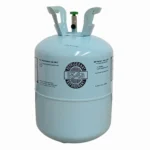
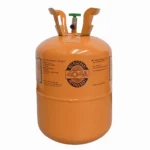
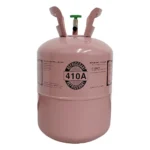
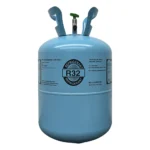
Once certified, the technician can purchase regulated refrigerant from any distributor that verifies Section 608 certification. The distributor must record the certification number and the type, and the sale is legal only when the certification matches the refrigerant's regulated status. Frigentra verifies certification at checkout, records it for compliance, and ships 100 percent virgin, AHRI-700 certified R-410A, R-32, and R-134a, alongside certified reclaimed R-22 to certified technicians with free standard ground shipping in the 48 contiguous U.S. states and same-day dispatch before 2PM EST. See our EPA verification process for how the verification works and the compliance guidelines for the records you should keep.
The purchase is also the moment to confirm you are buying the right product. A certified technician buying virgin refrigerant with a Certificate of Analysis protects both the equipment and the technician's liability; buying undocumented gas, even with a valid certification, transfers purity risk to the technician. Pair the certification with documented virgin product from an authorized distributor, and every charge is both legal and safe.
Maintaining Your Certification
Section 608 certifications do not expire. A certification earned under the original program remains valid under the 2017 rule update, and there is no continuing-education requirement to keep the credential itself active. The technician's authority to handle refrigerant persists for the life of the certification holder.
What does change is the regulatory environment. The 2017 update added new recordkeeping requirements, changed leak-rate thresholds, and extended sales restrictions, and future rulemakings may further tighten the program. A technician whose certification does not expire still must comply with the rules in force at the time of the work, which means staying current with regulatory changes through industry publications, employer training, or professional organizations such as NATE, which offers additional voluntary certifications that complement Section 608.
The practical maintenance practice is to keep the certification card accessible, record the certification number and issuing organization separately, and review the current EPA Section 608 program materials annually. A technician who does that has a credential that lasts a career and the knowledge to use it correctly as the rules evolve.
Conclusion
EPA Section 608 certification is the foundation of a legal, professional HVAC career. The credential opens the door to handling and purchasing regulated refrigerant, and the knowledge required to pass the exam is the knowledge that protects the atmosphere, the equipment, and the technician. Choose the certification type that matches your work, prepare with a complete study guide and practice exams, test through an approved organization, and use the credential to buy documented virgin refrigerant from a distributor that verifies it. Buy refrigerant with EPA cert from Frigentra, and start your certified career with the right product and the right paperwork.
Frequently Asked Questions
Does EPA 608 certification expire?
Section 608 certifications do not expire. A certification earned under the original program remains valid under the 2017 rule update, but technicians must comply with the current sales, evacuation, and recordkeeping requirements that apply to their work.
Can I buy refrigerant without EPA certification?
No. Federal law prohibits the sale of regulated refrigerants to anyone without a valid EPA Section 608 certification, with a narrow exception for small cans of certain substitutes for do-it-yourself motor vehicle service. Frigentra verifies Section 608 certification at checkout.
How long does it take to get certified?
Most technicians pass after one to three weeks of part-time study. The exam is offered on demand through EPA-approved testing organizations, and results are typically available within days of sitting the test.
Can I take the test online?
Yes. EPA-approved testing organizations offer proctored online and in-person exams. Online exams use remote proctoring to verify identity and prevent cheating, with the same content and passing score as the in-person exam.
Where can I buy refrigerant with my EPA certification?
Frigentra HVAC Supply sells 100% virgin, EPA-certified R-410A, R-32, and R-134a, alongside certified reclaimed R-22 to certified technicians with Section 608 verification at checkout and free standard ground shipping in the 48 contiguous U.S. states.