
5 Clear Signs Your AC Unit is Low on Refrigerant (And How to Fix It)
- Home
- 5 Clear Signs Your AC Unit is Low on Refrigerant (And How to Fix It)
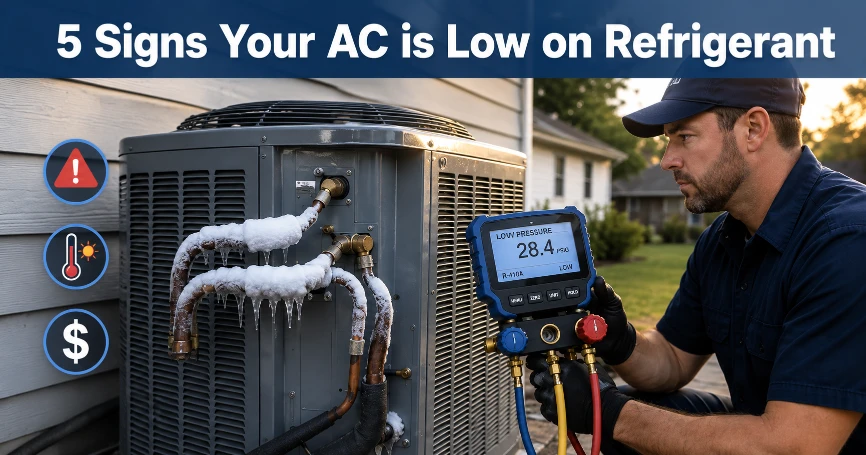
A residential or light-commercial air conditioning system does not consume refrigerant. The same charge installed at the factory circulates through the closed loop for the entire life of the equipment, absorbing heat at the indoor coil and releasing it at the outdoor coil. When the system is low on refrigerant, the cause is almost always a leak, and the symptoms are remarkably consistent across equipment brands and refrigerants. Recognizing the signs of low refrigerant early protects the compressor, keeps energy bills in check, and prevents a small leak from becoming a catastrophic failure.
This guide walks through the five clearest indicators that your AC is low on charge, explains the physics behind each symptom, and gives you a safe, legal action plan. Because refrigerant handling is federally regulated, we also cover when to call a certified technician and where to buy EPA-certified refrigerant when it is time to recharge. If you want to skip ahead, our refrigerant purchasing FAQ answers the most common compliance questions, and our guide to proper charging procedures explains how technicians verify a full charge.
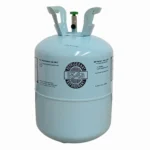
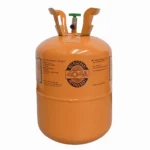
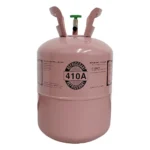
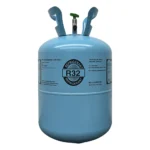
The same warning signs apply whether your system runs R-410A, the newer R-32, or a legacy R-22 charge. The refrigerant type changes operating pressures and recharge cost, but the sealed-loop physics do not change: any drop in charge means refrigerant has escaped through a leak, and the symptoms below are how that escape shows up in the equipment long before a gauge set ever gets connected. Reading them correctly is the difference between a $200 service call and a full system replacement.
Sign #1: The System Blows Warm or Lukewarm Air
The most immediate symptom of a low refrigerant charge is warm or lukewarm air at the supply registers. Refrigerant is the heat-transfer medium; when the charge is low, the evaporator coil cannot absorb enough heat from the return air, so the air delivered to the rooms stays close to room temperature instead of dropping 15 to 20 degrees Fahrenheit across the coil.
To check this safely, set the thermostat to cooling mode and let the system run for at least 15 minutes. Hold a thermometer in a supply register and another in a return grille. A properly charged system shows a temperature split of roughly 15 to 20 degrees Fahrenheit between return and supply. A split under 10 degrees, especially when the outdoor condenser is clearly running, is a strong indicator of low charge, restricted airflow, or a metering-device problem. Of these, low charge is the most common and the most damaging if ignored, because the compressor keeps running trying to satisfy the thermostat while starved of the refrigerant it needs for cooling and lubricant return.
Warm air alone can also be caused by a dirty filter, a frozen coil, or a failed compressor, so do not jump to a refrigerant diagnosis without the other signs. But warm supply air combined with a running outdoor fan is the single strongest prompt to schedule service before the compressor is damaged.
Sign #2: Ice Buildup on Evaporator Coils
It sounds counterintuitive, but a low refrigerant charge frequently causes the indoor evaporator coil to freeze into a block of solid ice. Here is why: low charge drops the suction pressure, and dropping suction pressure lowers the saturation temperature of the refrigerant inside the coil. When saturation falls below the freezing point of water, condensation on the coil freezes instead of draining away. As ice builds, it insulates the coil, which further reduces heat absorption, which drops pressure even more, in a runaway feedback loop.
You will usually notice this symptom as reduced airflow at the registers (the ice physically blocks the air path), combined with visible frost on the copper suction line at the indoor unit or, in severe cases, frost traveling back toward the outdoor condenser. If you see ice, turn the system off immediately at the thermostat and switch the indoor fan to "on" to begin melting the ice. Do not attempt to chip or scrape the ice away; you will damage the delicate aluminum fins.
A frozen coil is not a refrigerant diagnosis by itself; a clogged filter or restricted airflow can freeze a fully charged coil too. But a coil that freezes after you have verified clean filters and open registers, especially alongside low temperature split, points strongly to a low charge from a leak. Once the coil is thawed and the leak is repaired and the system is recharged, the freezing stops.
Sign #3: Hissing or Bubbling Noises
Refrigerant escaping through a small leak often makes an audible hissing sound near the indoor air handler, the outdoor condenser, or along the refrigerant lines. A larger leak, or a leak that crosses a restriction, can produce a bubbling or gurgling noise. These sounds are the refrigerant physically moving through a gap in what should be a sealed circuit, and they are one of the few low-charge symptoms you can detect without instruments.
Hissing can also come from a normal expansion device (the metering device hisses as it throttles liquid refrigerant into the evaporator), so location matters. A hiss localized to a specific fitting, Schrader access valve, coil u-bend, or section of refrigerant line, especially one that developed recently, is suspicious. Bubbling sounds in the suction line can indicate the compressor is pulling vapor with low pressure because the charge is too low to feed liquid to the metering device.
For technicians, electronic leak detectors, soap-bubble solution, ultrasonic detectors, and pressure-decay testing are the professional methods for confirming and locating leaks. Our leak detection guidelines walk through the approved methods and the common leak points to inspect first. Homeowners should not attempt to pinpoint a leak by ear alone; a hissing sound is a reason to call for service, not a diagnosis.
Sign #4: Higher Than Normal Energy Bills
A low refrigerant charge reduces the cooling capacity of the system, which forces the compressor to run longer to satisfy the thermostat setpoint. Longer run times mean more kilowatt-hours consumed for the same indoor comfort, and the compressor also runs less efficiently when it is starved of charge because the suction gas is less dense and the compressor works harder per unit of cooling delivered. The combined effect shows up as a noticeable spike in your electric bill during cooling season.
Compare your current summer bill to the same month in the prior year, normalizing for any rate changes. A 15 to 30 percent increase in cooling-season consumption with no change in thermostat settings or occupancy is a meaningful signal, especially if it coincides with any of the other symptoms in this guide. The Department of Energy publishes efficiency tips that help you separate a refrigerant problem from filter, duct, or thermostat issues; a system running long hours despite clean filters and reasonable setpoints is a candidate for a charge check.
Catching the leak early also limits refrigerant loss, which is both a cost and an environmental issue. R-410A has a high global warming potential, and venting it through an unaddressed leak is a regulated emission. The faster a leak is found and repaired, the less refrigerant is lost and the lower the recharge cost at the next service call.
Sign #5: The Thermostat Can't Keep Up
When a system is undercharged, it loses capacity. Even running continuously, a low-charge system may not reach the thermostat setpoint during the hottest part of the afternoon, so the thermostat never satisfies and the equipment never cycles off. Homeowners often describe this as "the AC runs all day and the house never cools down."
A capacity shortfall shows up clearly on the design-day. If your system previously maintained 72 degrees on a 95-degree afternoon and now struggles to hold 76 degrees on the same outdoor temperature, and the system is running continuously, the equipment has lost capacity. The likely causes are low charge from a leak, an aging compressor, a dirty condenser coil, or a metering-device restriction. Of these, low charge is the most common and the easiest for a technician to confirm by checking subcooling on a TXV system or superheat on a fixed-orifice system.
Continuous run is hard on the compressor. A compressor designed to cycle is being asked to operate outside its intended duty cycle, which shortens its life and increases the risk of a burnout that turns a recharge into a full system replacement. If your thermostat cannot keep up on a normal summer afternoon, schedule service the same week rather than letting the system run around the clock through the cooling season, because every additional hour of operation on a low charge compounds the damage to the compressor bearings and windings.
How to Fix a Low Refrigerant Issue
The fix for low refrigerant is never "add more refrigerant." Refrigerant is not a consumable; a low charge means refrigerant has escaped through a leak. The correct repair sequence is: locate the leak, repair the leak, evacuate the system to remove air and moisture, weigh in the correct charge per the manufacturer's data plate, and verify performance with superheat or subcooling.
Locating the leak requires an EPA Section 608 certified technician using electronic leak detectors, bubble solution, or pressure-decay testing. Common leak sites include Schrader access valves, flare and brazed fittings, evaporator and condenser coil u-bends, and Schrader cores that have loosened over time. Repair may be as simple as tightening or replacing a Schrader core, or as involved as replacing a leaking evaporator coil. After the repair, the technician evacuates the system with a vacuum pump to a deep vacuum (typically 500 microns or below) to remove non-condensables and moisture, then weighs in the manufacturer-specified charge.
The technician must hold a valid EPA Section 608 certification to legally handle regulated refrigerants. See our overview of EPA Section 608 certification for the credentialing details, and the federal rules on EPA refrigerant handling for the regulatory text. Once the leak is repaired, proper charging procedures ensure the system gets the exact charge the manufacturer specified, not a guess.
Cost of Refrigerant Recharge in 2026
The cost to recharge a system after a leak repair depends on the refrigerant, the leak location, and the system size. In 2026, a typical residential R-410A recharge after a minor access-point leak repair runs roughly $300 to $600 including labor and refrigerant; a larger leak requiring a coil repair or replacement can push the total to $1,000 or more. R-32 systems, with their smaller required charge mass, often cost less to recharge per incident, though A2L service procedures can add labor. R-22, where still used in legacy systems, commands a premium because new production is banned and only reclaimed stock is available.
For contractors and facilities managers, the most cost-effective strategy is prevention: annual maintenance that includes a leak inspection for systems with a full charge of 50 pounds or more, prompt repair of any leak detected, and stocking virgin, AHRI-700 certified refrigerant from an authorized distributor so a recharge is never delayed by supply. You can buy EPA-certified refrigerant from Frigentra with free standard ground shipping in the 48 contiguous U.S. states and same-day dispatch before 2PM EST, with EPA Section 608 verification handled at checkout. Reference the AHRI standards for the purity specifications your recharge refrigerant must meet.
Frequently Asked Questions
How often should I add refrigerant to my AC?
You should never need to "add" refrigerant. If your system requires refrigerant, it has a leak. Adding refrigerant without fixing the leak violates EPA regulations and can damage your compressor.
Can I recharge my AC myself?
No. Federal law requires EPA Section 608 certification to handle refrigerants. Unlicensed technicians risk fines, system damage, and environmental harm.
How much does it cost to fix a refrigerant leak?
Repair costs range from $200 to $1,500 depending on the leak location and system size. Frigentra offers free refrigerant leak detection with any service call.
Can low refrigerant damage my compressor?
Yes. Low refrigerant causes the compressor to overheat, leading to costly repairs or complete failure. Always address low refrigerant immediately.
Where can I buy EPA-certified refrigerant online?
Frigentra HVAC Supply sells virgin refrigerants and certified reclaimed R-22 online. All orders require EPA Section 608 certification verification.